Flooring Equipment
Flooring & Spare Parts
Impact-absorbing rubber surfacing for playgrounds — tiles and poured granulate options.
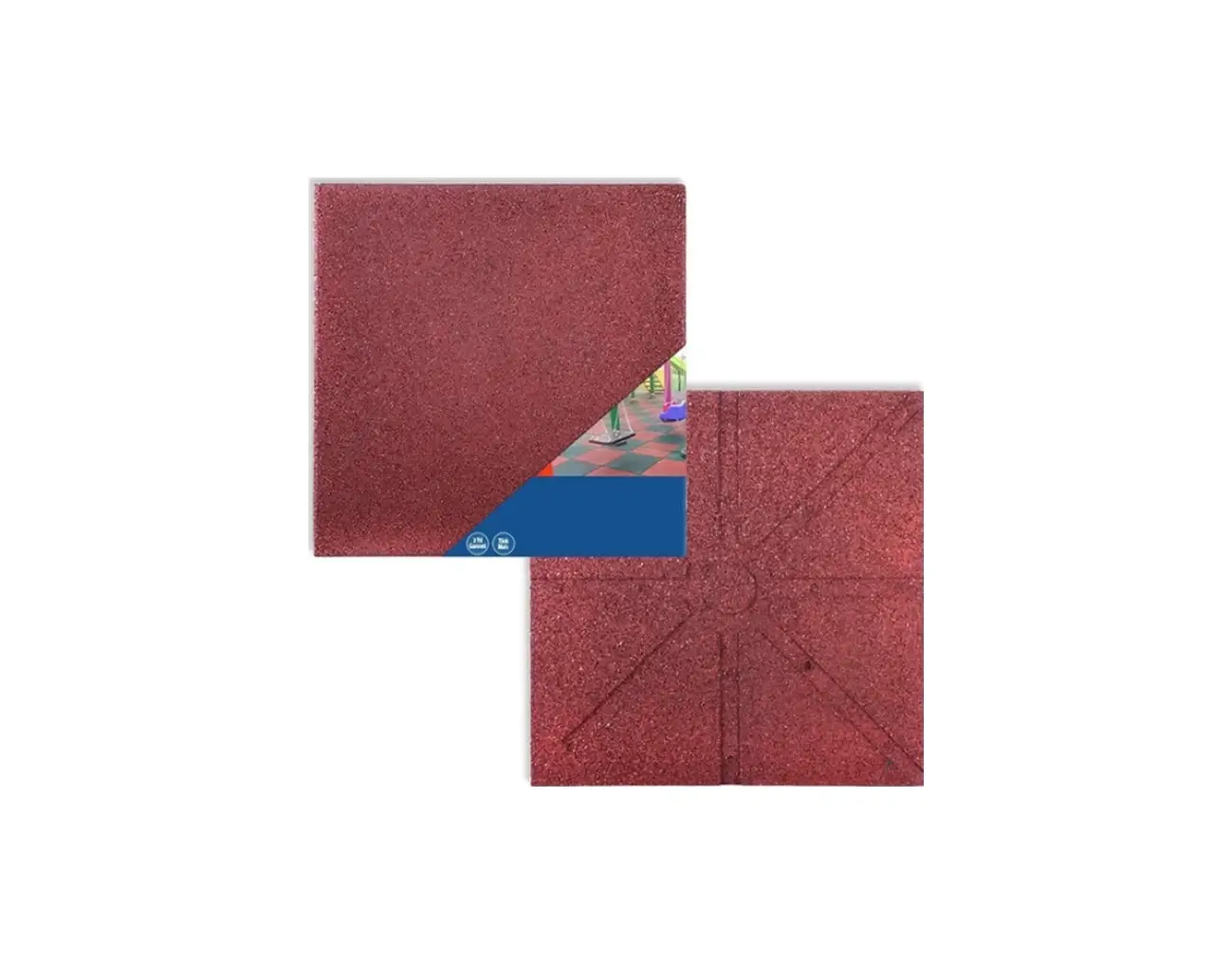
Rubber surfacing is the impact-absorbing layer that reduces fall injuries in play areas. The catalogue holds 5 products across two application types: square rubber tiles and poured rubber granulate. Surfacing is a safety component rather than a decorative choice — concrete, asphalt, compacted earth and grass do not do this job.
What determines the requirement is the drop height of the equipment above: the distance from the ground to the highest point from which a child can fall freely. As that figure rises, so does the thickness of the layer beneath. The surfacing decision therefore belongs with the equipment decision, not after it; choosing equipment and deferring the flooring is the most common budget surprise in playground projects. The equipment's drop height and the height the surfacing is suited to are assessed together. Playground equipment falls under TS EN 1176 and impact-absorbing surfacing under TS EN 1177.
The second determinant is how much surface has to be covered, and this is where a frequent mistake occurs. The surfacing must cover the whole safety area, not the ground beneath the unit. On most playground sets that area is two to three times the equipment's footprint; across our range, safety areas run from roughly 35 m² to 441 m². When comparing quotations, establish which figure the m² total was calculated from — it prevents an unwelcome difference later.
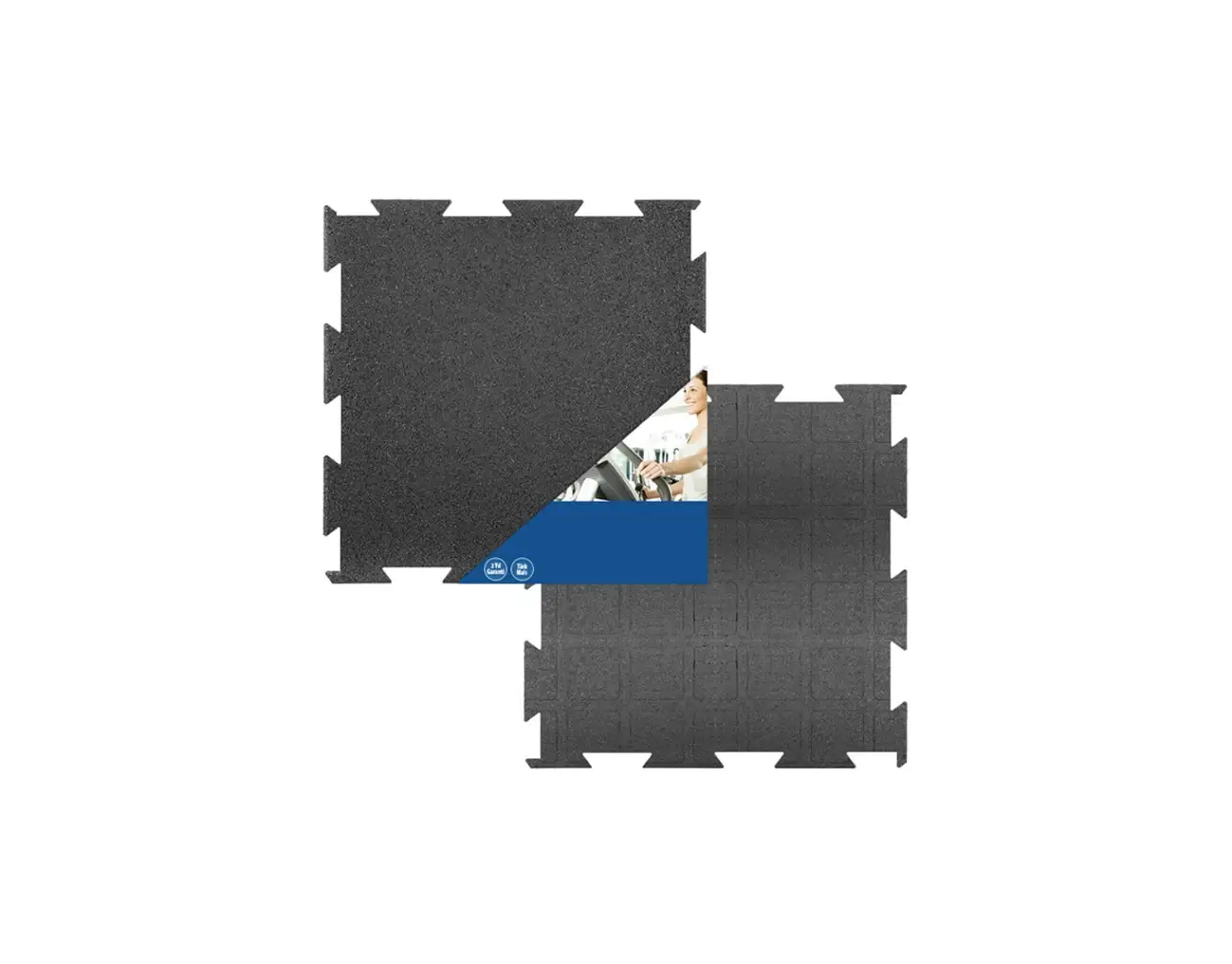
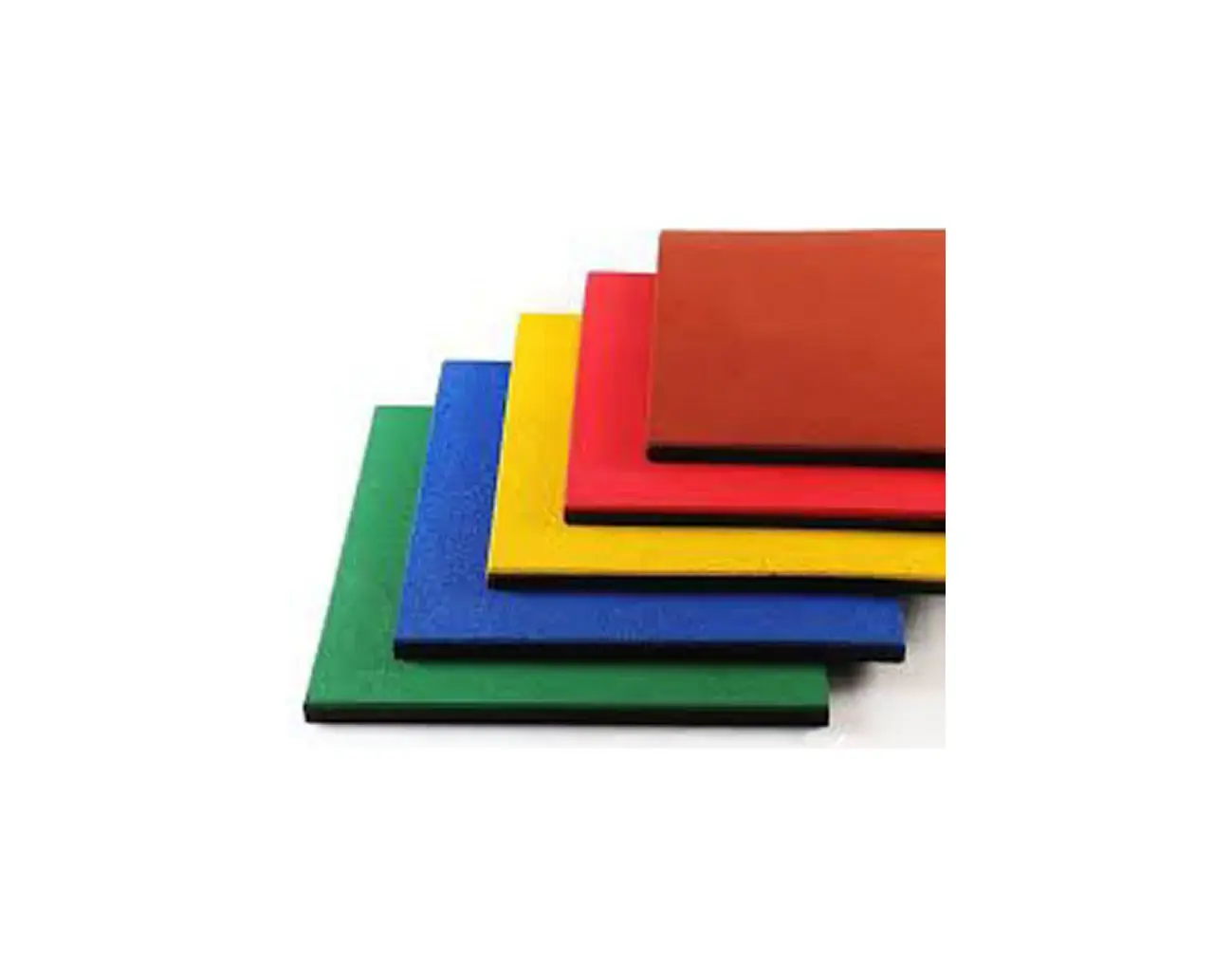
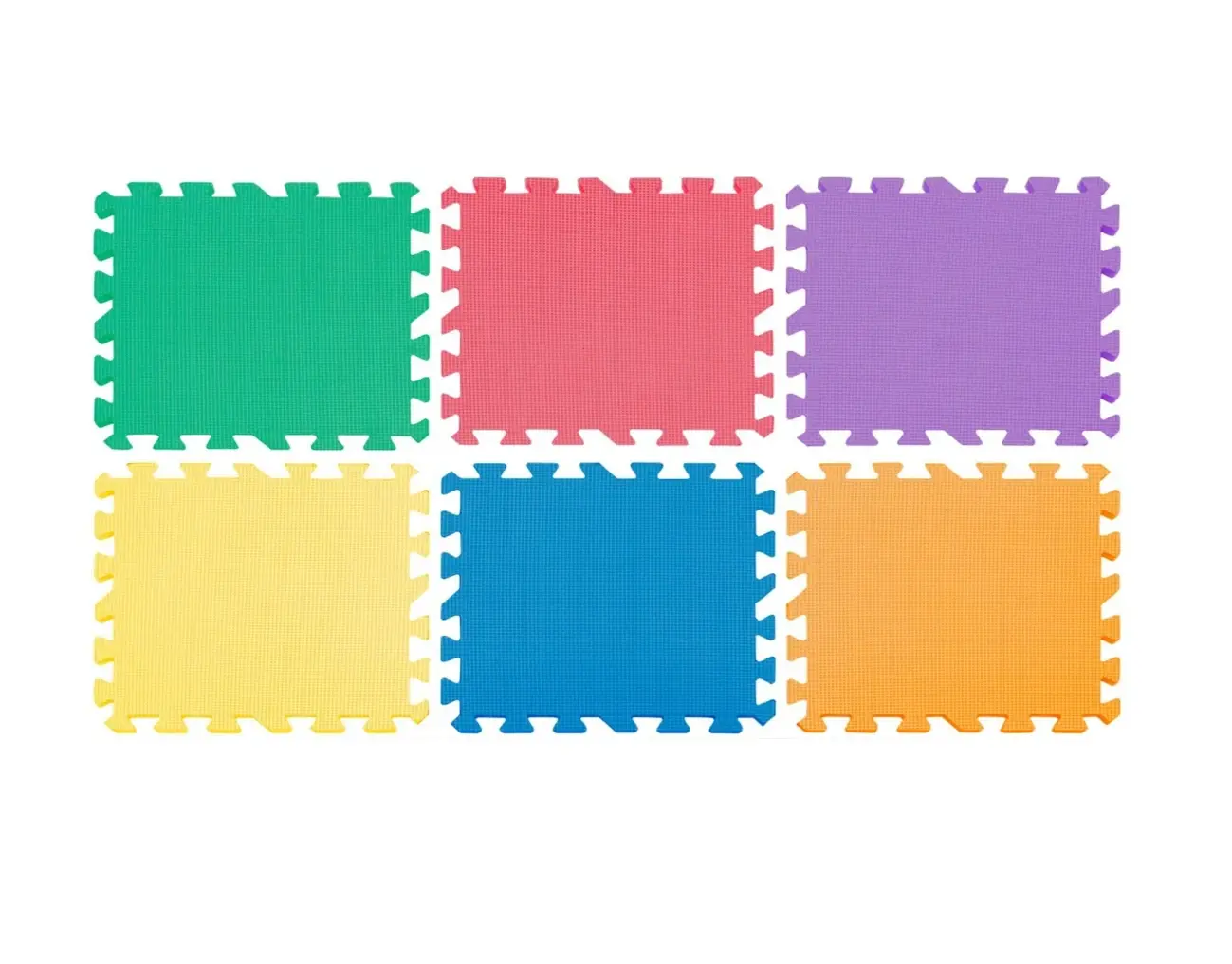
Tile installation means laying factory-pressed square slabs that interlock on site. Where the base is ready, laying is quick; a single damaged or burnt slab can be lifted and replaced; thickness and density are identical from slab to slab; and the area can be covered in sections, allowing the work to be phased. The drawbacks are visible joint lines, dirt collecting in those joints over time, and edges lifting where the base is uneven.
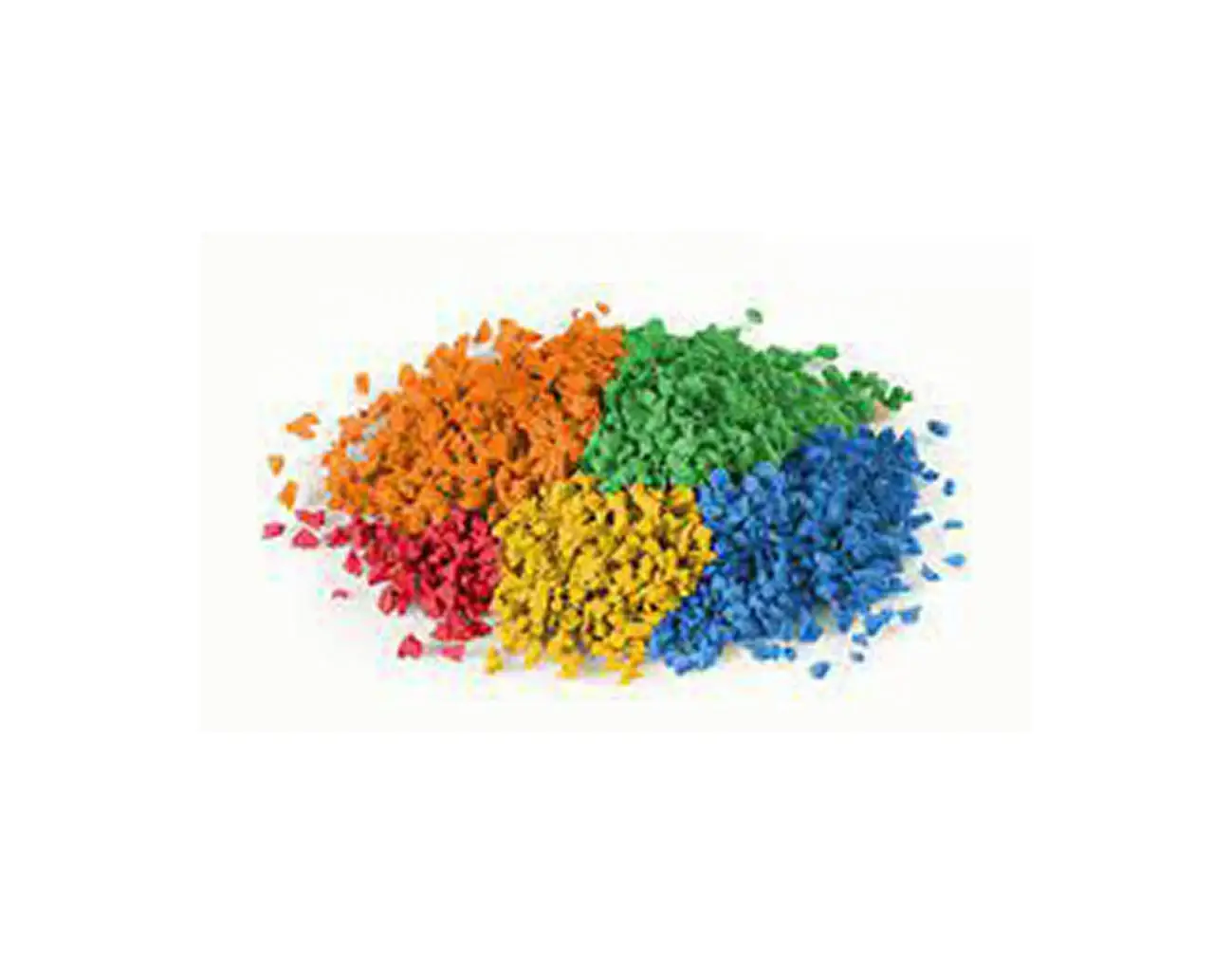
Poured rubber granulate is mixed and laid on site to give a continuous surface. With no joints there is no edge-lifting problem, colour transitions and free-form patterns become possible, and irregular boundaries and curved areas are easier to follow. Against that, repair is not as simple as swapping a tile, and application depends on weather conditions. Heavily used public areas tend to favour tiles; design-led projects favour poured surfacing.
What decides the outcome in both cases is the base. A level, well-draining substrate such as concrete or compacted aggregate is required; on a base that holds water, service life shortens whatever the surfacing type. Edge detailing should be planned from the outset — surfacing laid without a kerb or edge profile lifts at the perimeter over time and becomes a trip point. Whether an existing surface can be laid over depends on the state of that substrate; send us a photo and we can assess it.
In maintenance, joints opening, edges lifting and thinning are checked seasonally, and any water-holding spots noted. A check before winter is particularly worthwhile, since water freezing in an open joint can widen it enough to lift the covering. Allow also for dark surfaces heating in summer sun, and for leaf and resin build-up creating slipperiness in areas under trees. Share your area in m² and the drop height of the equipment going in, and we will determine the right thickness and application type together.
Flooring Equipment
Flooring Equipment
Flooring Equipment
Flooring Equipment
Flooring Equipment
We would like to use analytics cookies to understand how the site is used. The site works the same if you decline. Details