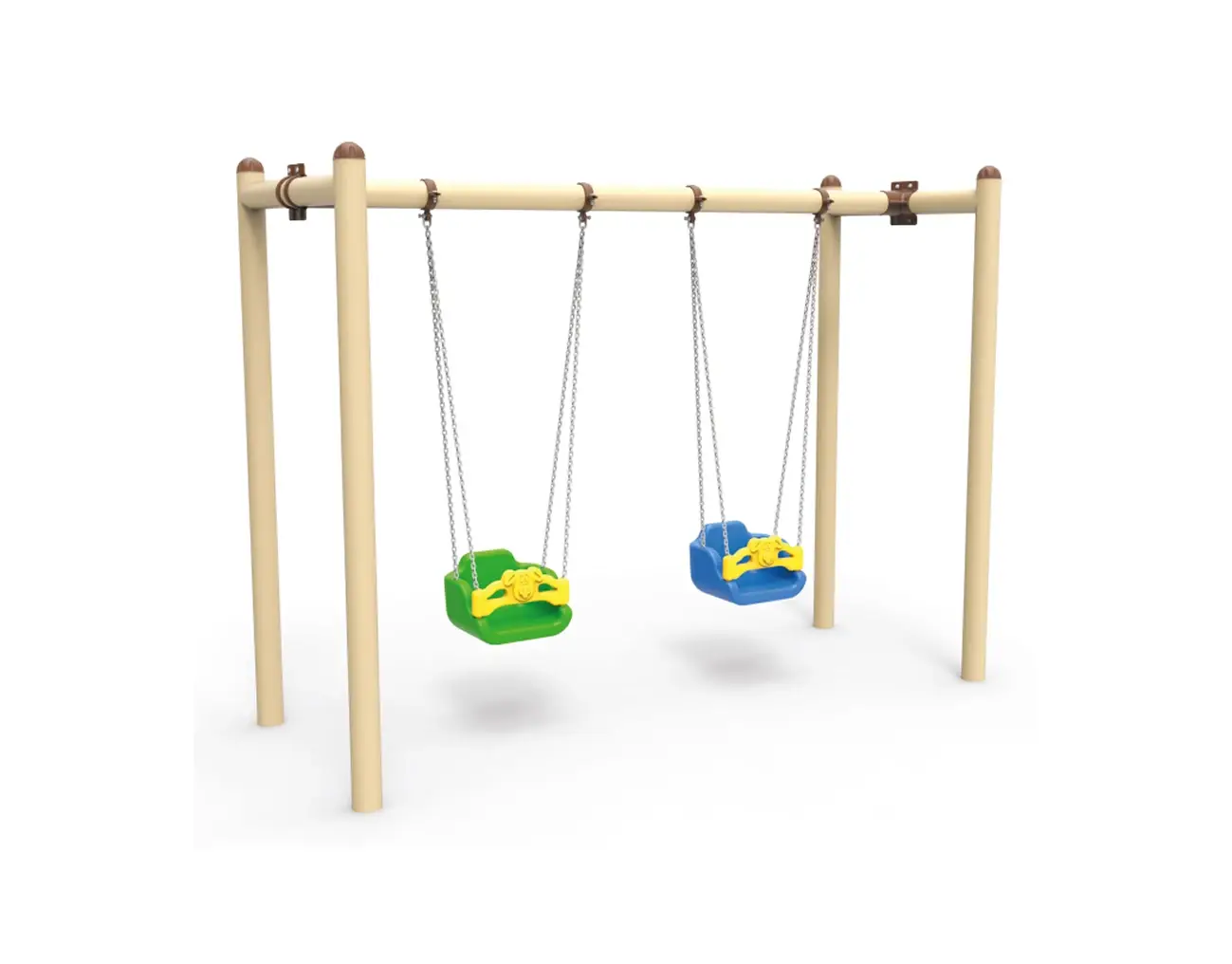
Swings
Play Equipment
Single, double and toddler-seat park swings with metal or timber frames.
The swing is the most heavily used standalone item in a play area, and in most projects the first thing added after a playground set. The catalogue holds 8 models; frames may be steel profile or timber-posted, with seats suspended on chains. Metalwork is electrostatically powder-coated and timber posts are protected with water-based paint.
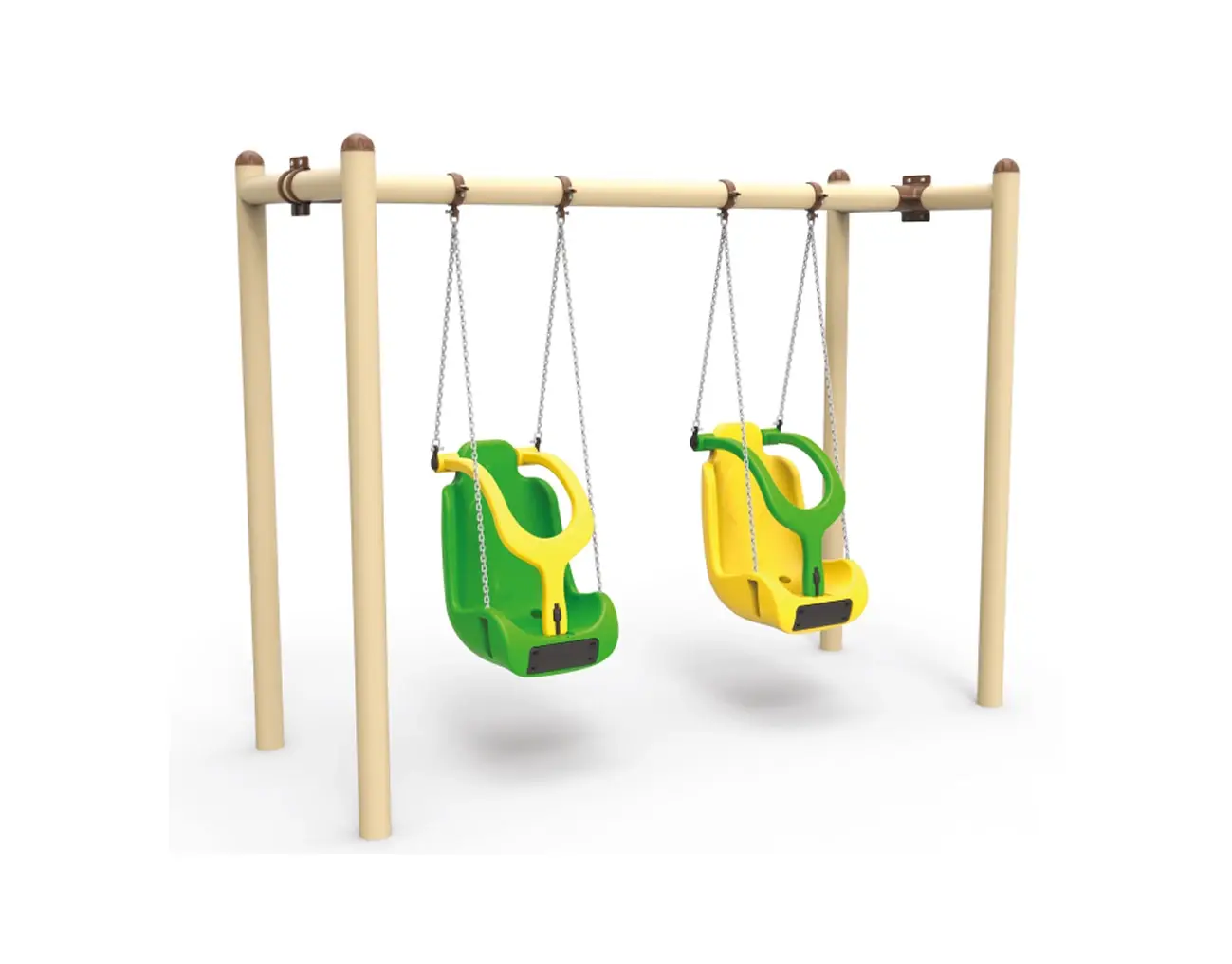
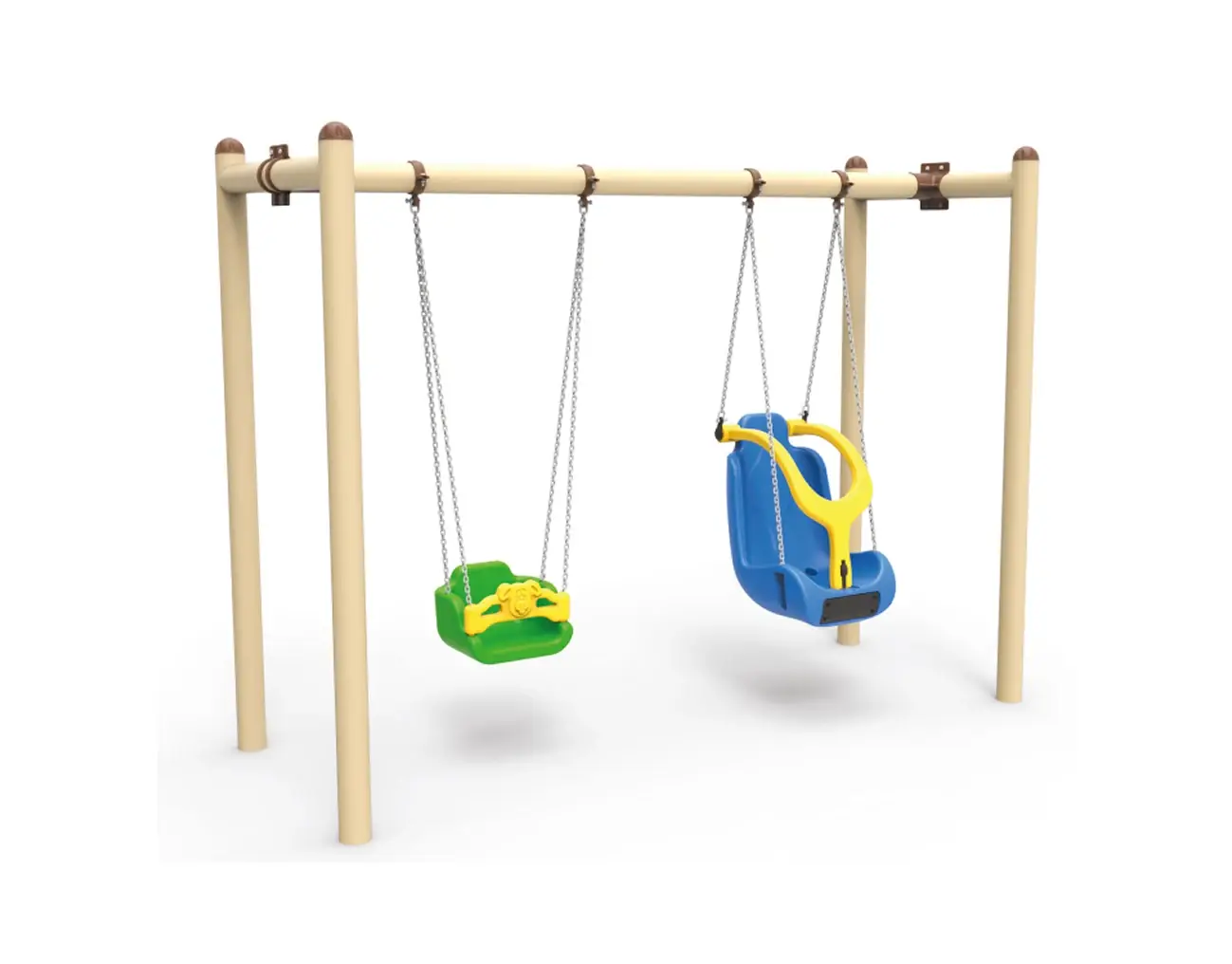
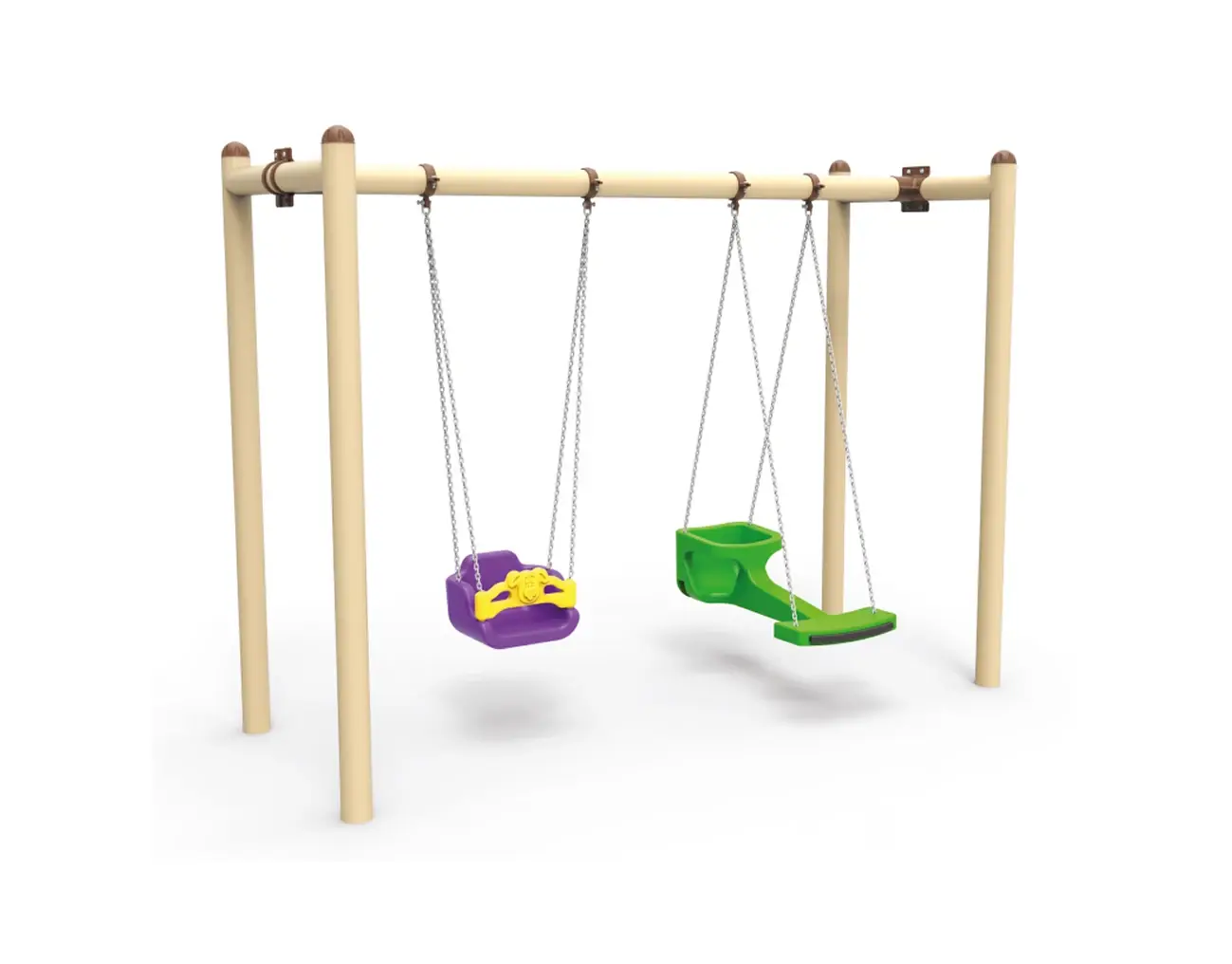
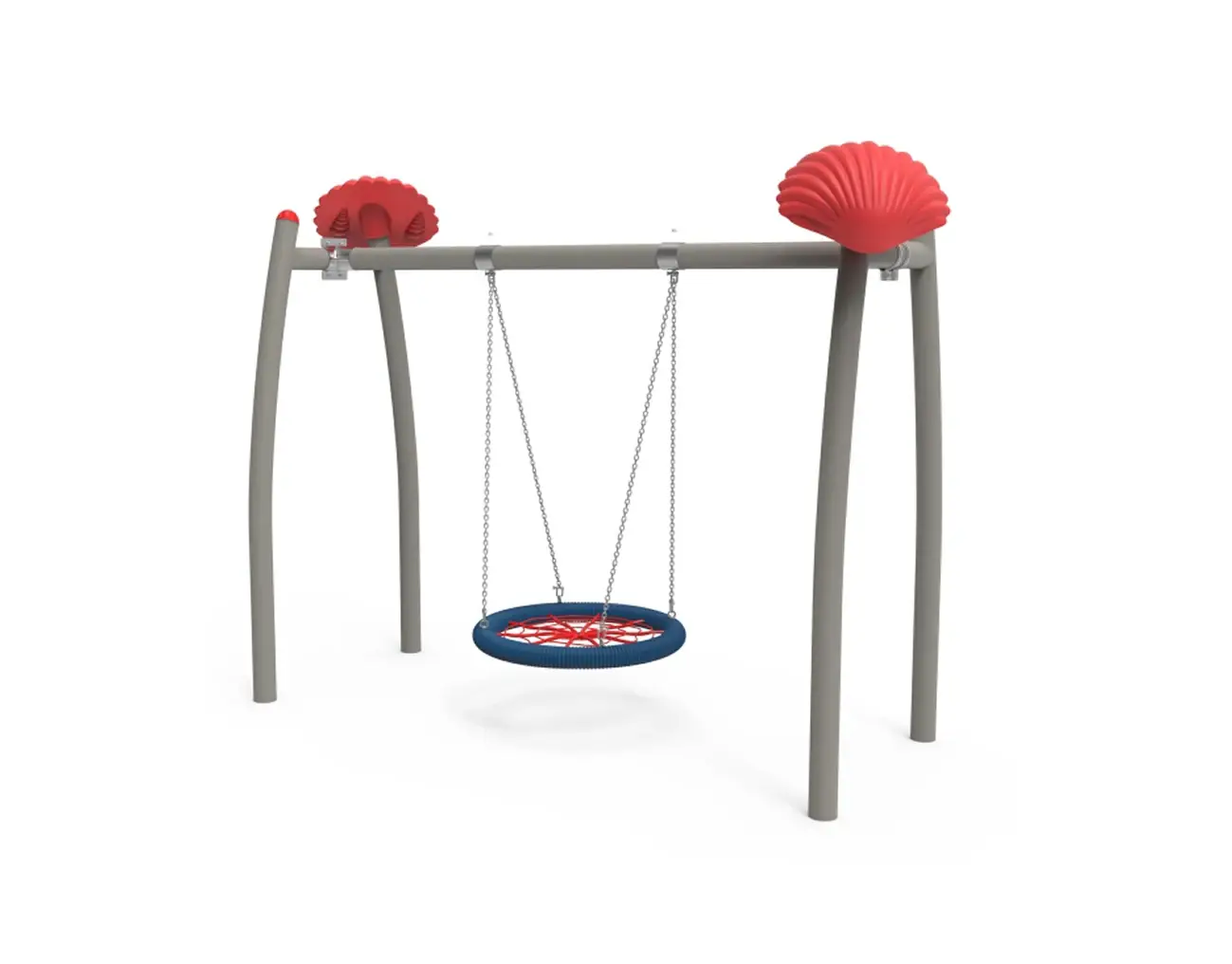
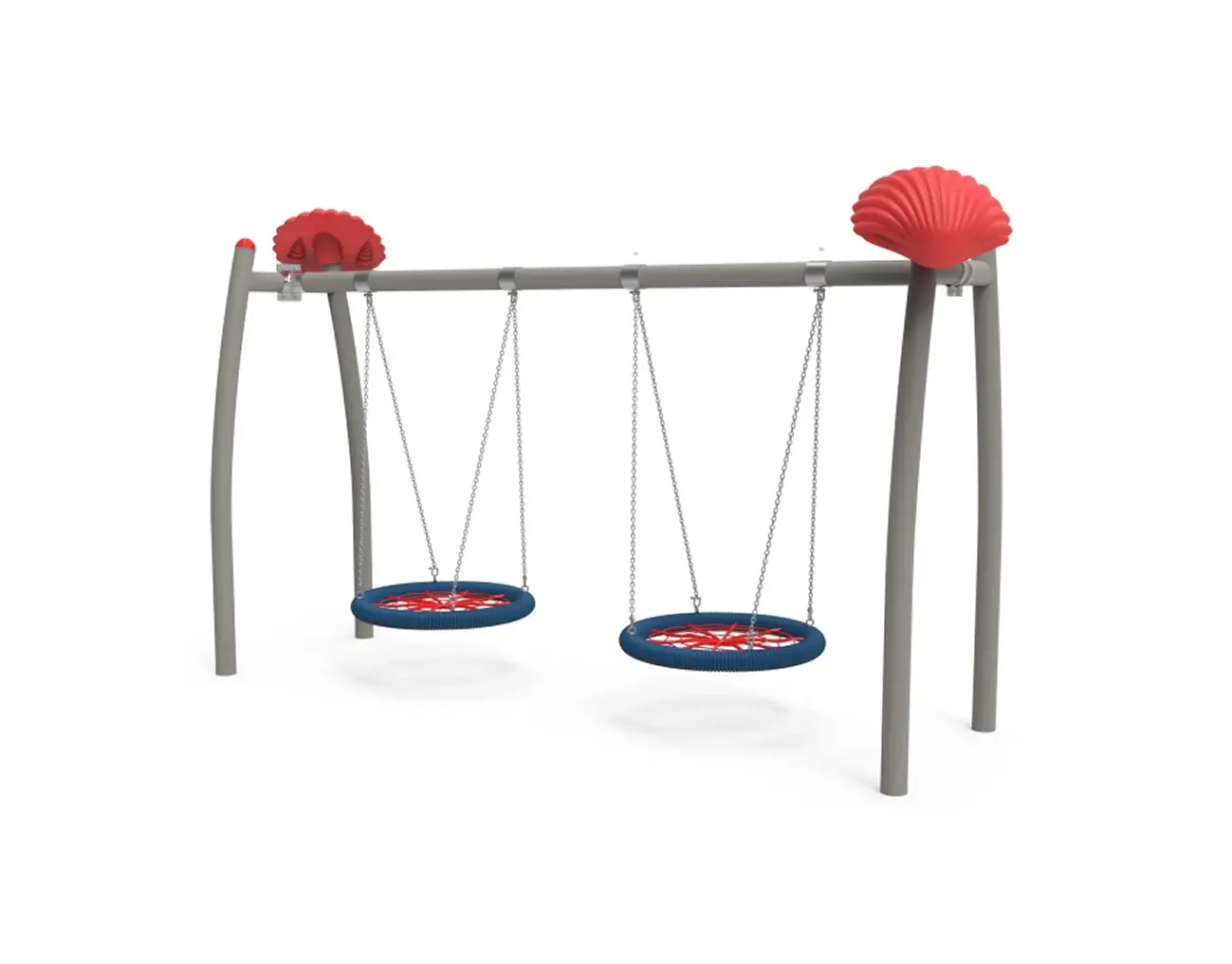
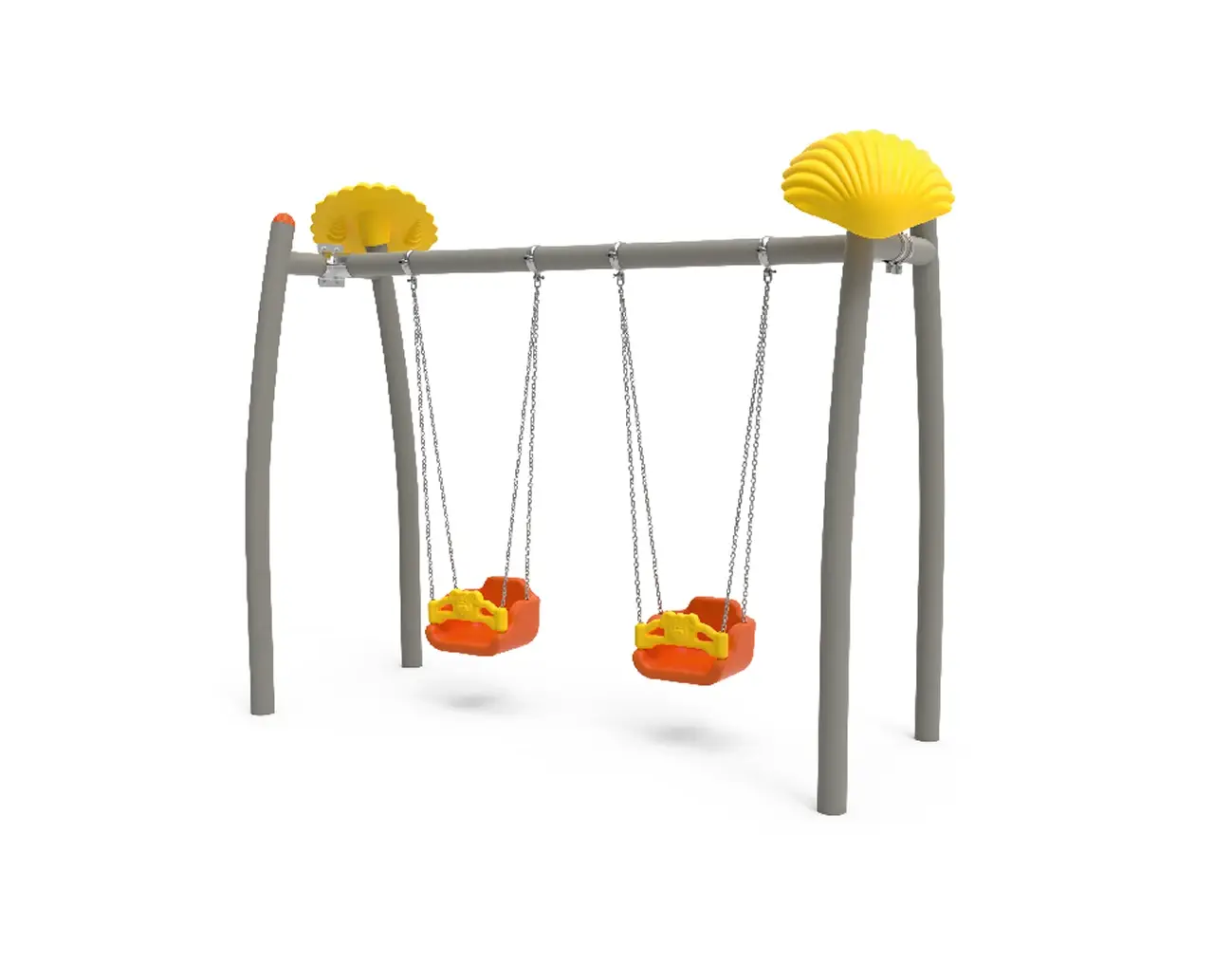
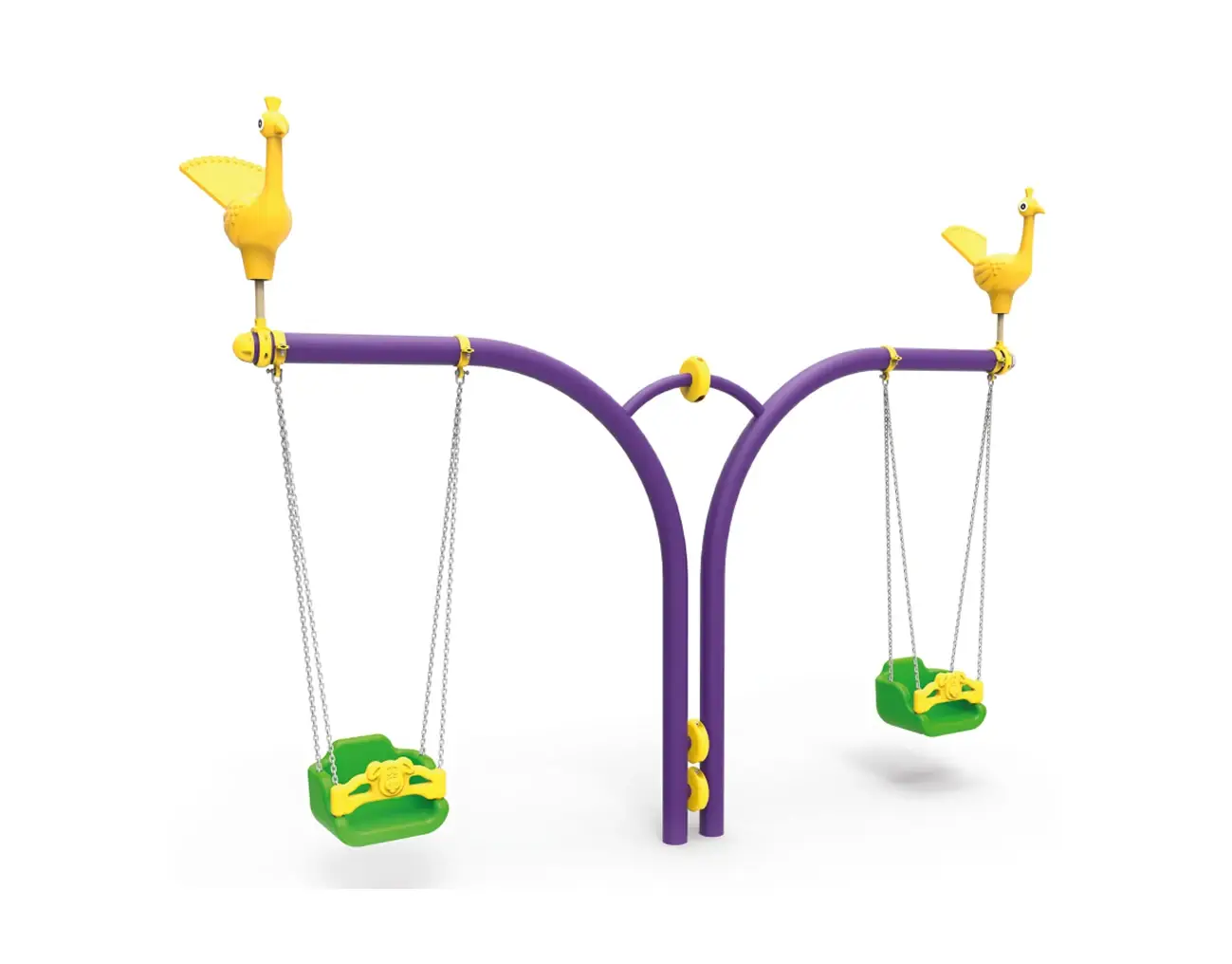
Seat type decides which age the swing serves. Flat seats suit children over three, enclosed toddler seats with back and side support serve the youngest, and nest seats — a wide mesh seat — allow several children at once or a child who wants to lie back. Different seat types can be combined on one frame to build a unit for mixed ages; nursery gardens favour toddler seats, neighbourhood parks mixed arrangements.
Siting a swing calls for a different rule from other equipment. Its safety area is not evenly distributed: it extends well forwards and backwards along the swing path and stays narrow to the sides. A swing therefore belongs at the edge of a site, with its swing axis parallel to pedestrian flow. Nothing goes in front of or behind it — no bench, litter bin, tree, kerb or other play unit.
The most common mistake on site is installing a swing close to the exit of a playground set's slide. A child leaving the slide runs on and crosses the swing path, and once the two safety areas overlap that becomes unavoidable. The second frequent error is placing the swing in the middle of an area so people can walk all the way round it — anyone passing behind cannot see the moving seat.
The impact-absorbing surfacing beneath is sized to the fall height in use, not the seat's resting position, and it must cover the whole area extended along the swing path. That is why the surface to be covered comes out surprisingly large relative to the unit itself. Swings fall under TS EN 1176, and the impact-absorbing surfacing beneath them under TS EN 1177. Dimension tables for this range are not published on the catalogue pages, so we supply the figures in writing at the survey and quotation stage.
Whether the frame is steel or timber-posted is a decision point too. Steel frames carry a lower maintenance load and offer more colour options; timber-posted models speak the same language as green space and timber street furniture, but the timber needs periodic protection and the joints loosen more often than on steel units because of seasonal movement. In salty, humid coastal settings the integrity of the metal coating becomes decisive.
In capacity terms the swing is where queuing is felt most; a single-seat swing is almost always insufficient in a play area. Fitting several seats on one frame, or installing two separate units, noticeably reduces waiting and the jostling that comes with it.
Anchoring is critical at installation. A swing is the one type of equipment whose legs take upward force in use; a frame that is not fixed down, or sits on an inadequate foundation, will work loose over time. Concrete foundations and anchoring are carried out by our own team along with transport and surfacing.
In maintenance the fastest-wearing parts are chains, hooks and suspension bearings. Check them monthly and replace them without delay once wear appears in a link or fibre. Seats and chains are supplied separately, so there is no need to renew the whole unit. Alongside this, anchor connections and paint integrity are reviewed seasonally. Share your site plan and we will work out where the swing should go.
Swings
Swings
Swings
Swings
Swings
Swings
Swings
Swings
We would like to use analytics cookies to understand how the site is used. The site works the same if you decline. Details