Climbing Equipment
Play Equipment
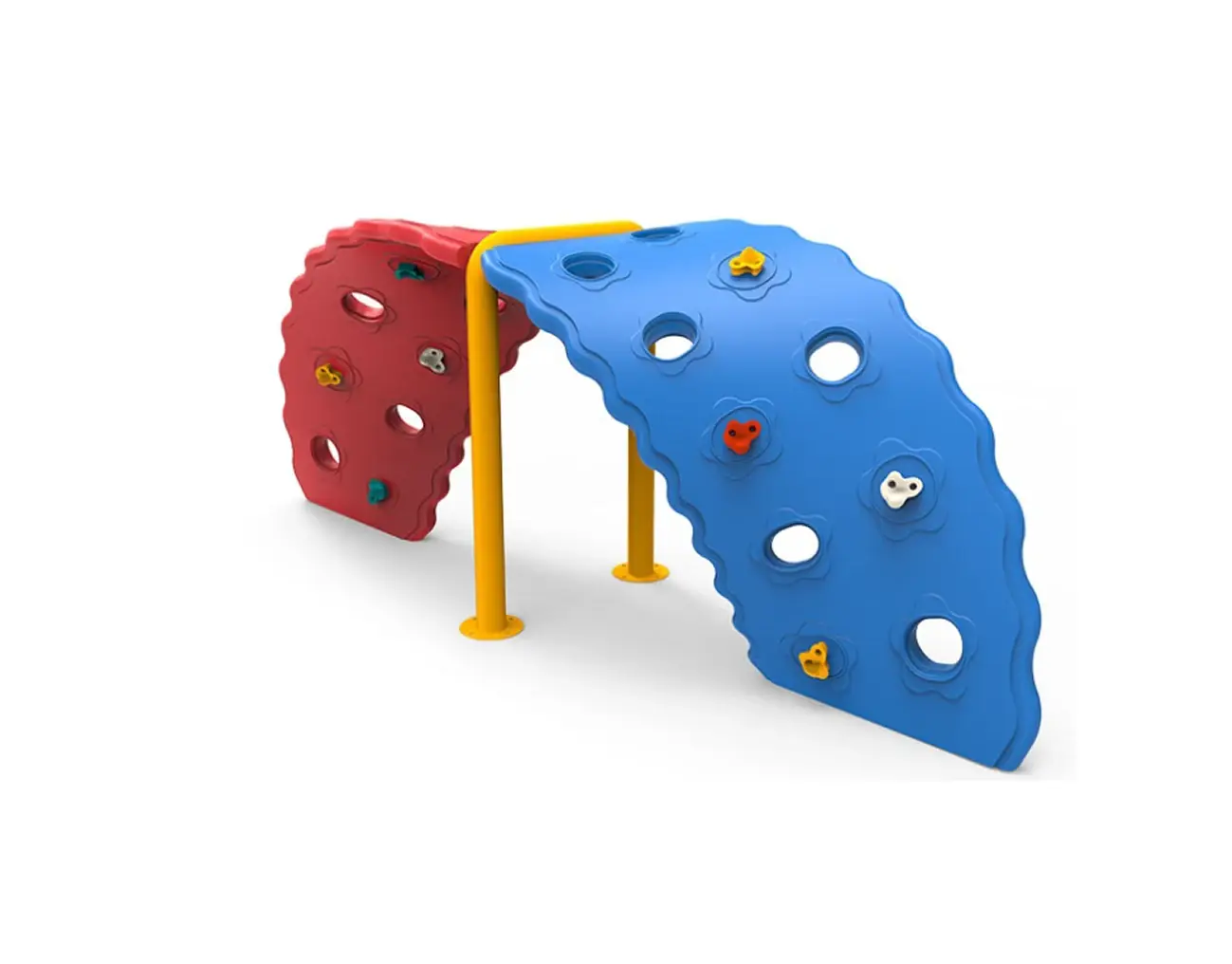
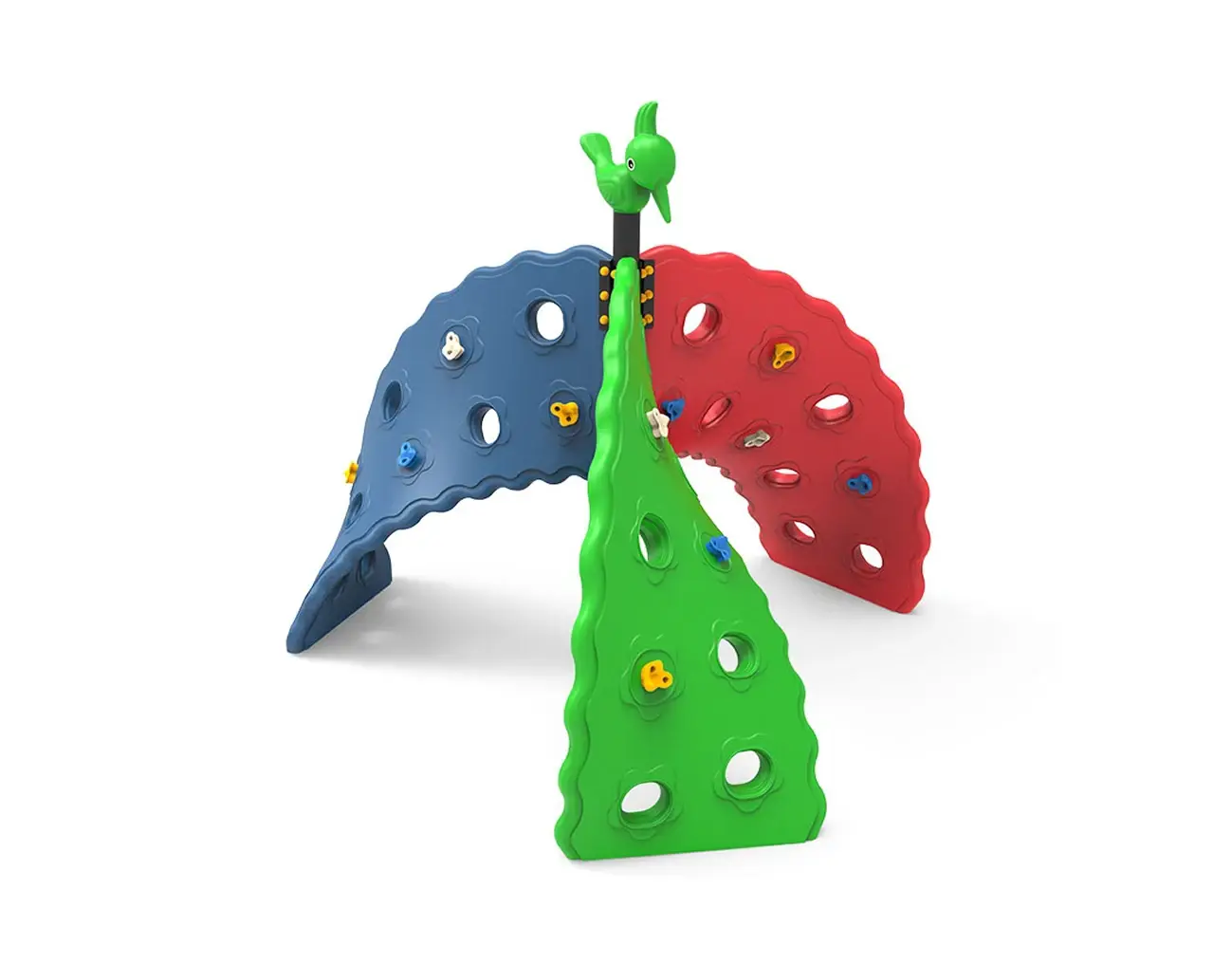
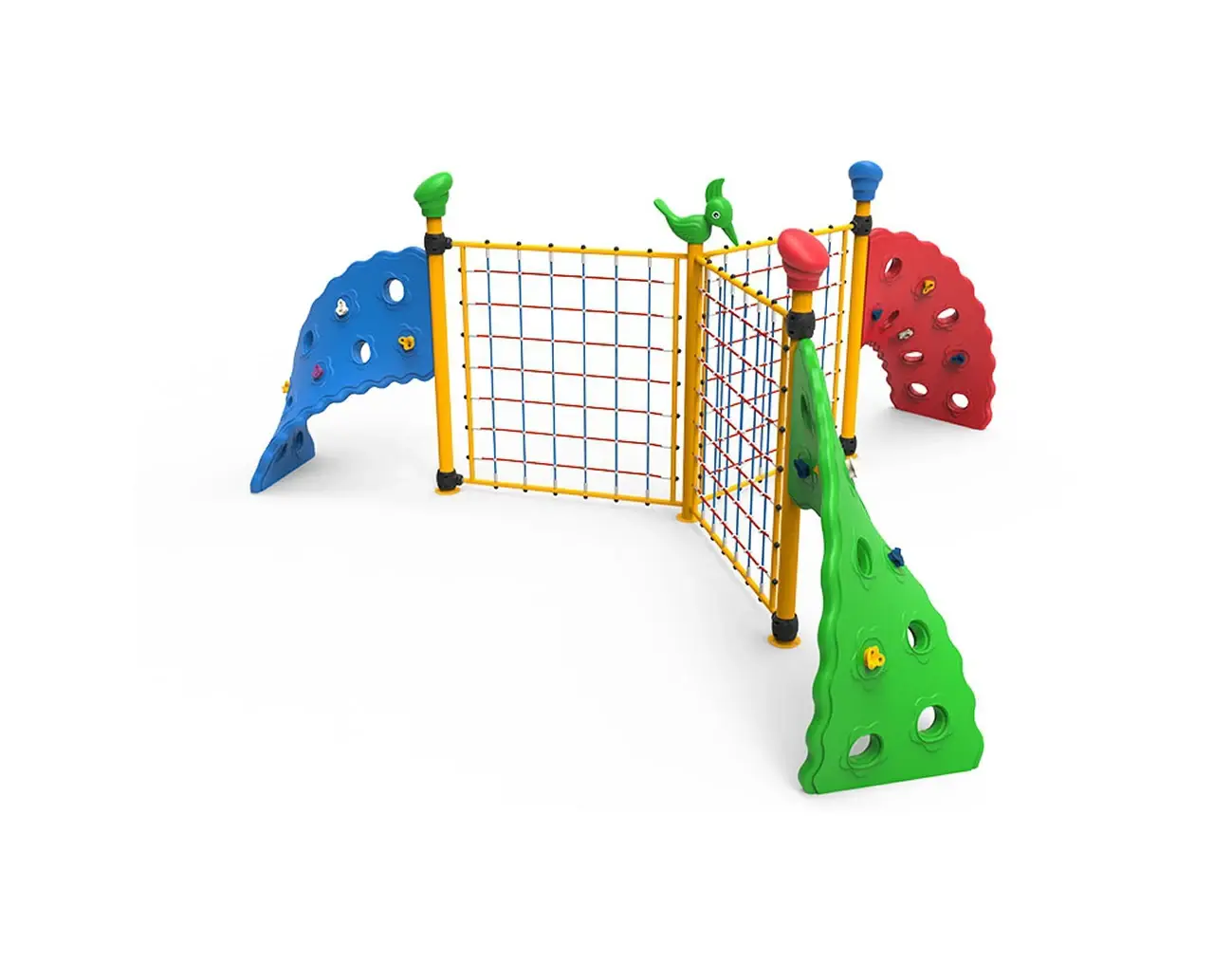
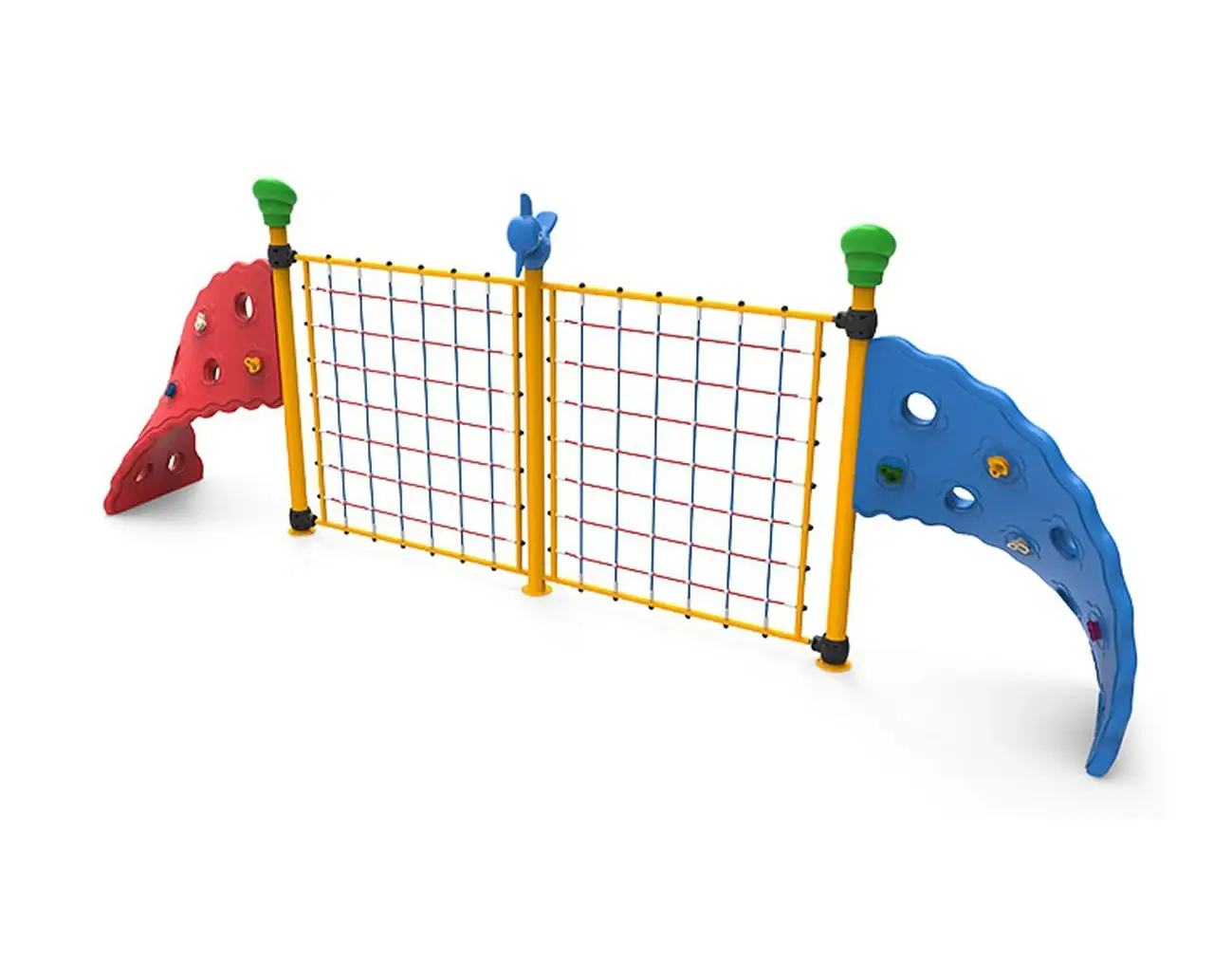
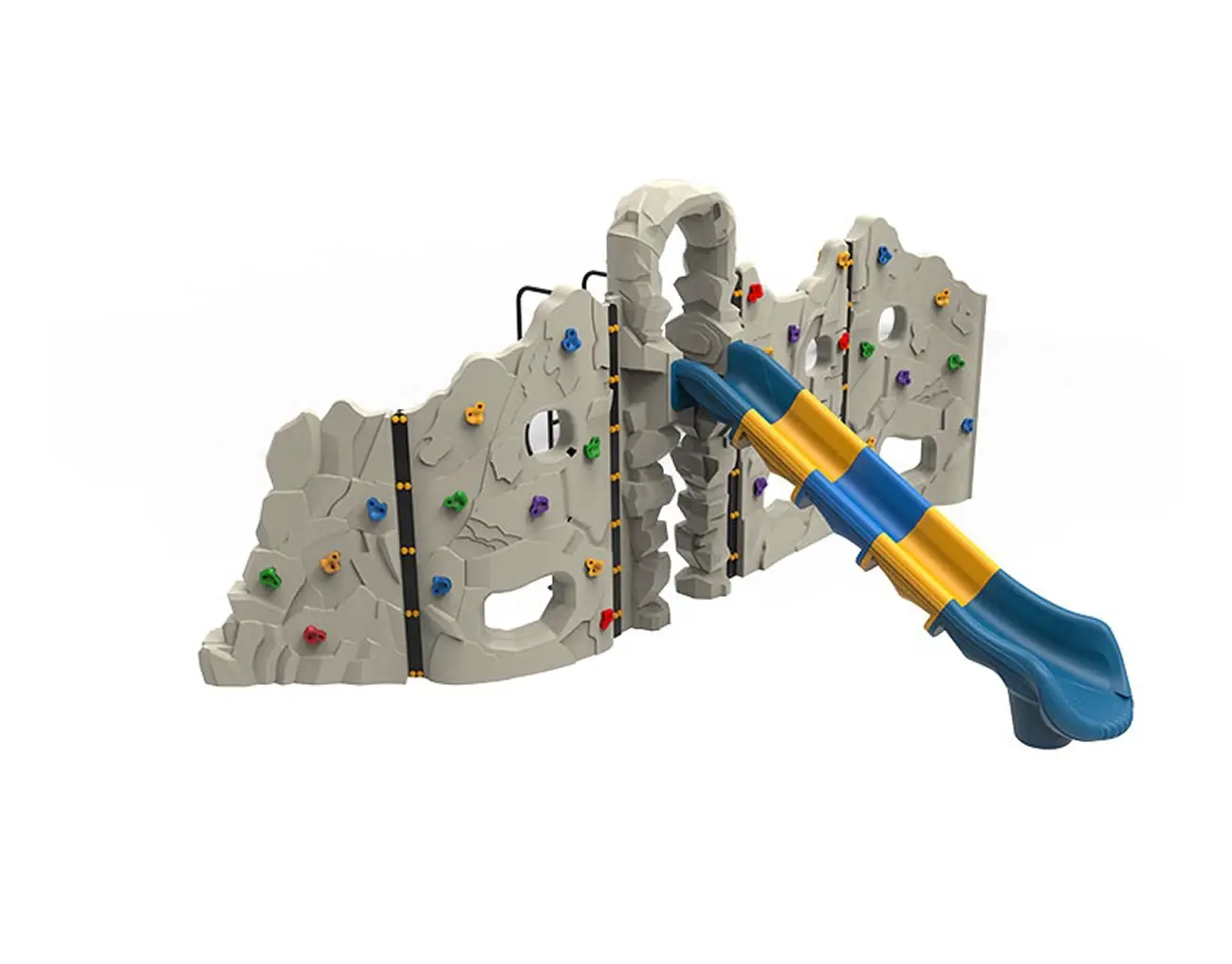
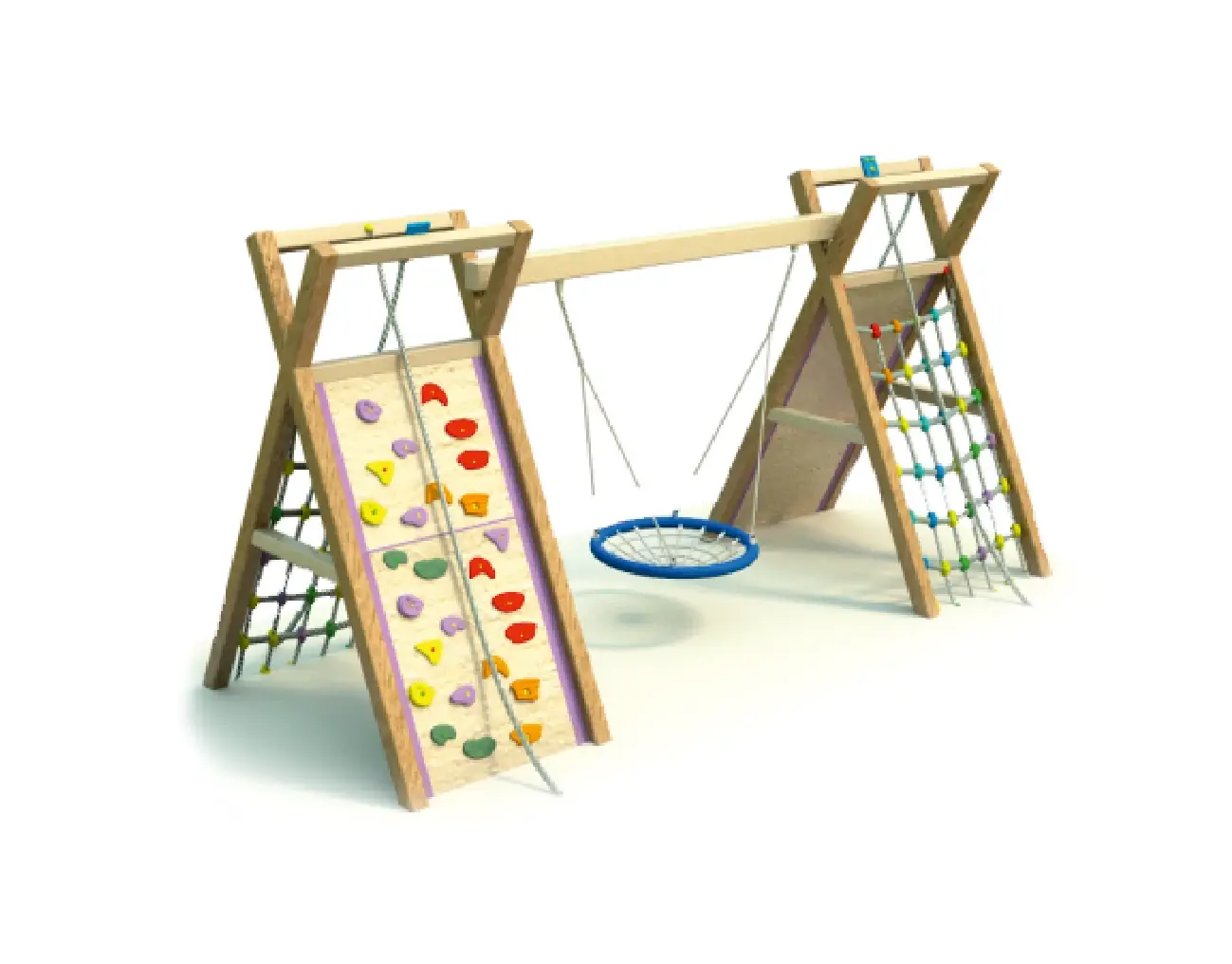
Climbing walls, net panels and rock-formed units — standalone equipment supporting balance and muscle development.
Climbing units stand independently of a playground set. The catalogue holds 6 models: handhold climbing walls, rope net panels and rock-formed climbing faces. Posts and frames are electrostatically powder-coated steel, while the climbing faces are panels laid out with grips and footholds sized for a child's hand.
What these units offer differs from a slide or a swing. Climbing requires a child to carry their own body weight, to plan hand and foot movement together, and to build a relationship with height; that combination is what develops balance, coordination and upper-body strength. On a slide the child is on the passive side of the movement — on a climbing face, the active side.
Being standalone units is a decisive planning advantage. They can be added to an existing play area later without touching the main structure; the only condition is that the new unit's safety area must not overlap that of its neighbours. For projects whose budget is spread across phases, this is the most practical way to grow an area. School grounds, residential play areas, nursery yards and neighbourhood parks are the typical settings.
The first figure to look at when choosing is the height of the climbing face, since it determines both the age group and the surfacing requirement. Low panels suit pre-school children while tall faces address ages six and over. Where both groups share a site, two units at different heights work better than a single mid-height one — the middle height is too much for the younger child and too little for the older.
Surfacing is not optional beneath climbing equipment. The thickness of the impact-absorbing layer follows from the height of the climbing face, and the covering must extend along both sides of the panel and across the clear space around it. A falling climber does not drop vertically; they travel in the direction of movement at the moment they lose grip. Climbing equipment falls under TS EN 1176, with the surfacing beneath it covered by TS EN 1177. Measurements for this group are not tabulated in the catalogue; we share them in writing at the survey and quotation stage.
A frequent siting mistake is installing a climbing panel parallel and close to a wall, fence or building façade. Clear space is needed behind the panel too — children do not fall only from the front face. The second mistake is placing the unit alongside a pedestrian route, where a falling climber lands on a passer-by. The panel belongs in a position open on every side.
In school grounds these units see intense use in short bursts at break time, which makes capacity planning necessary. A single climbing panel produces a queue during a busy break, and waiting children start circling round the panel — precisely when the safety area is breached. For the same budget, two small units generally serve a school better than one large one.
Units are set on concrete foundations and anchored in place. In maintenance, models with rope nets are checked monthly for fibre breakage and wear at end fittings, while handhold panels are checked for grip bolt tightness and surface wear on the grips themselves. A loose handhold is the most common fault on these units and the quickest to put right. Panel surfaces are reviewed annually for UV brittleness. Share your site plan and the age spread and we will settle on the right unit and position.
Climbing Equipment
Climbing Equipment
Climbing Equipment
Climbing Equipment
Climbing Equipment
Climbing Equipment
We would like to use analytics cookies to understand how the site is used. The site works the same if you decline. Details