Litter Bins
Urban Furniture
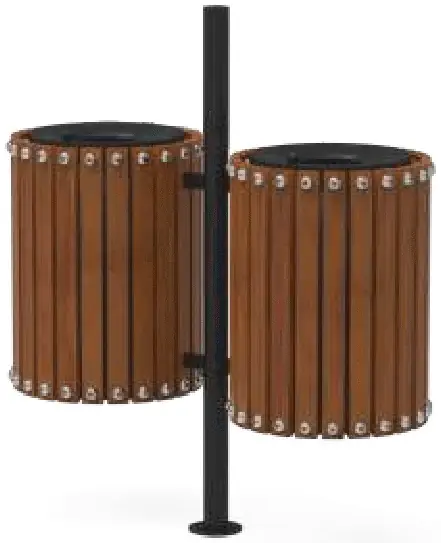
Timber-clad and metal outdoor litter bins — single, double and post-mounted models.
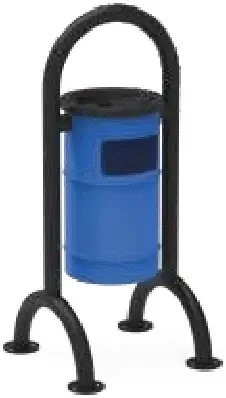
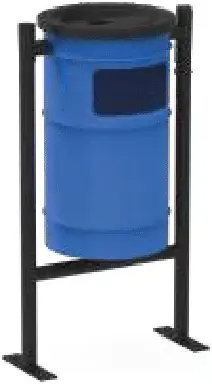
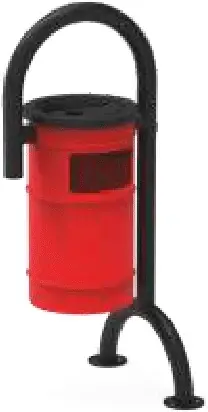
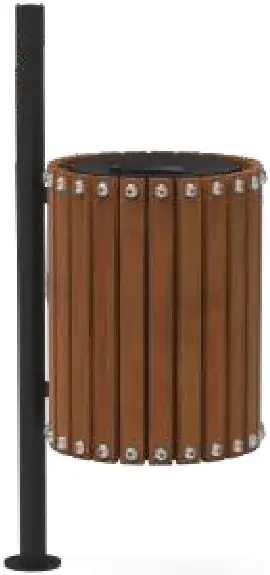
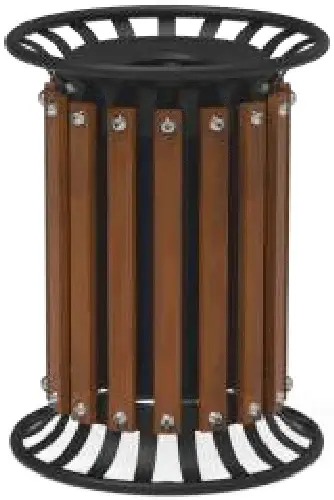
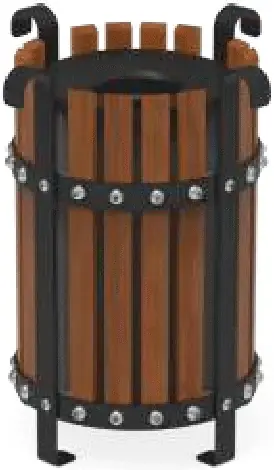
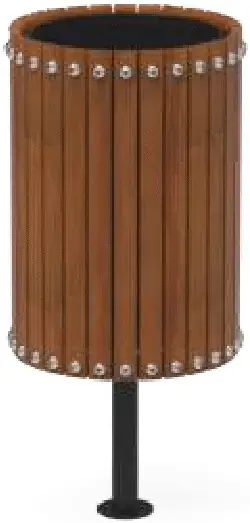
Outdoor litter bins are part of the furniture plan that keeps parks and pedestrian areas clean. The catalogue holds 13 models: cylindrical bins with timber slats held by metal bands, and all-metal bodies. Timber is protected with water-based paint, and metal bodies and bands are electrostatically powder-coated.
The most common mistake in urban furniture planning is putting the bin somewhere out of the way so it does not spoil the view. The outcome is predictable: waste ends up on the ground. The rule is simple — bins belong near benches, picnic tables and the natural pause points along pedestrian routes, because people will not carry litter more than a few steps. Moving existing bins to the right places is often more effective than adding more of them.
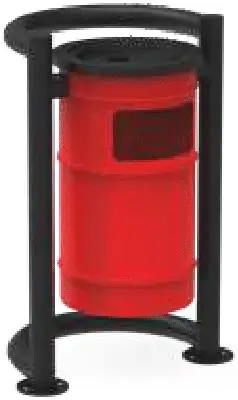
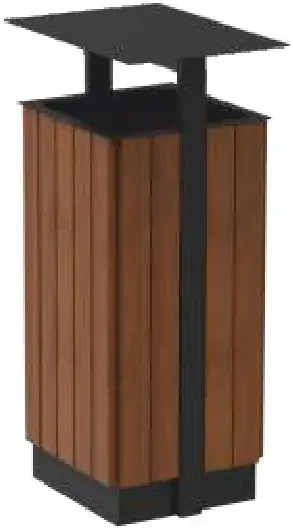
The first distinction in choosing a model is body material. Cylindrical timber-slatted bins speak the same language as timber benches and picnic tables, giving visual coherence in parks and picnic grounds, though the timber needs periodic protection. All-metal bodies carry a lower maintenance load and are easier to clean, suiting busy pedestrian routes, squares and transit stops. In salty, humid coastal settings, what decides the outcome is the integrity of the metal coating.
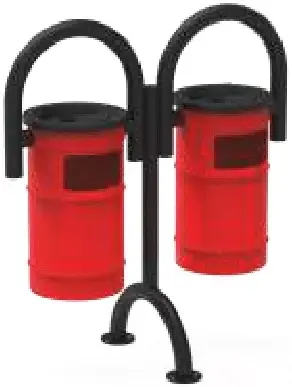
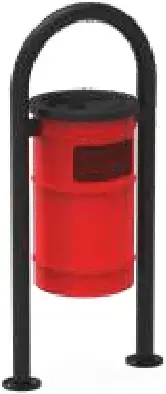
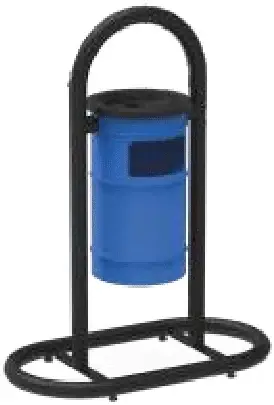
The second distinction is how the bin is fixed. Post-mounted versions are anchored into the ground and cannot be tipped over; they should be the choice in wind-exposed and sloping sites and anywhere with weak night-time supervision. Free-standing bins drift over time, and when they tip the contents scatter, turning a small job into a large one. Double units are used to separate waste at source.
Volume and emptying frequency belong together. A large bin emptied once a week performs worse than a small one emptied daily; once full, waste simply accumulates around it. Deciding on bin numbers without knowing the site's footfall and the cleaning team's round is guesswork. In practice, whether the inner container lifts out and whether one person can empty it makes more difference than the bin type.
Litter bins and recycling stations are not interchangeable. Bins take mixed waste and are distributed across the site; recycling stations have separate compartments for paper, plastic, metal and glass and are installed in smaller numbers at defined collection points. In municipal zero-waste schemes the two are planned together.
Post-mounted models require anchoring into a concrete foundation. Maintenance amounts to cleaning the interior regularly, renewing the protective coating on timber slats periodically, and watching paint integrity on metal surfaces. Corrosion usually starts at the base and the rim — the points where water collects — so a seasonal look at those two places noticeably extends service life. Send us a sketch of your site and we will work out bin numbers and positions.
Litter Bins
Litter Bins
Litter Bins
Litter Bins
Litter Bins
Litter Bins
Litter Bins
Litter Bins
Litter Bins
Litter Bins
Litter Bins
Litter Bins
Litter Bins
We would like to use analytics cookies to understand how the site is used. The site works the same if you decline. Details